


Why Your Tractor Won’t Start
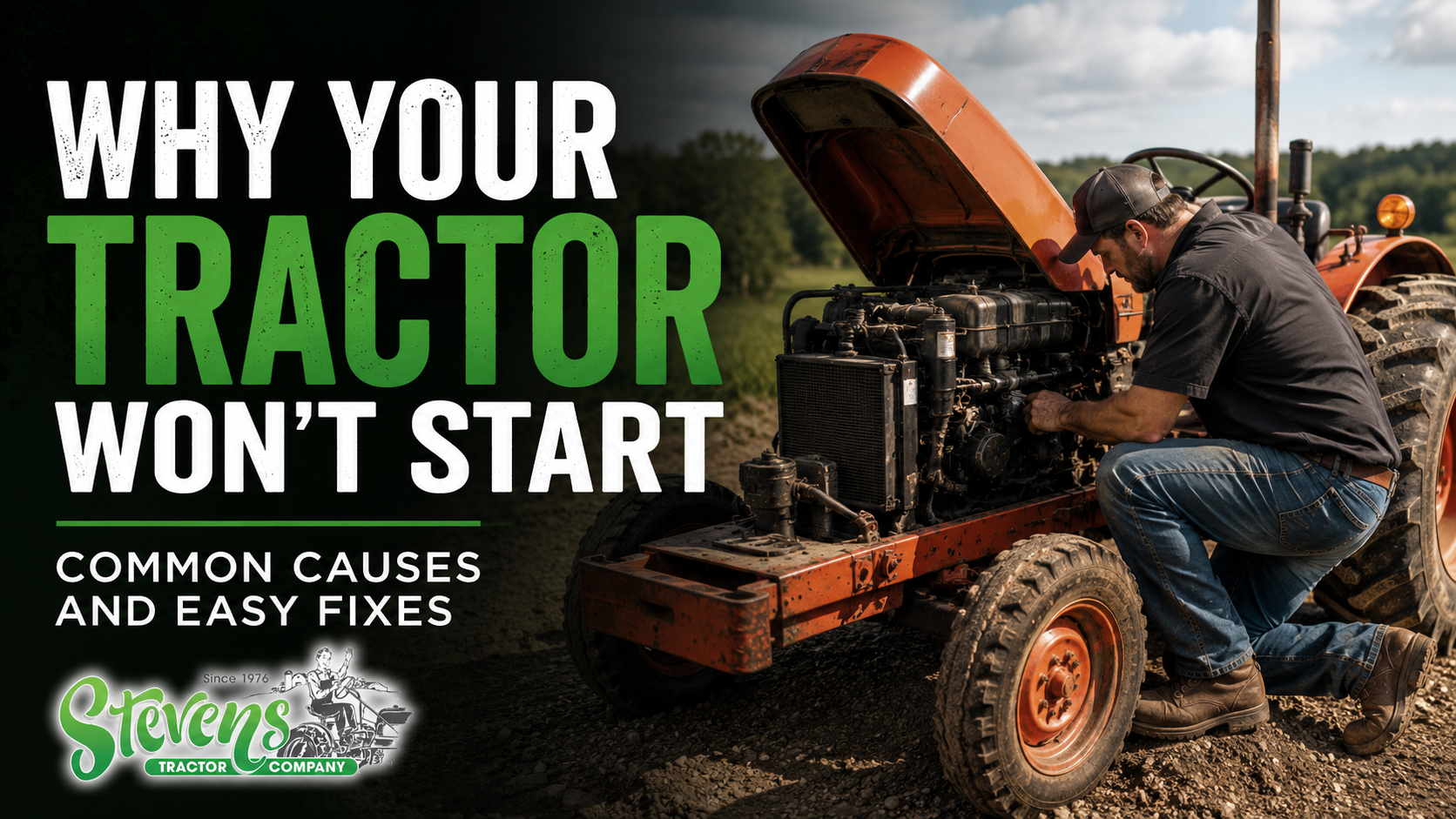
Why Your Tractor Won’t Start: Common Causes and Easy Fixes
Few things are more frustrating than getting ready to work only to find your tractor will not start. Whether you use your tractor daily on the farm or occasionally for property maintenance, starting problems can slow down your work and lead to costly downtime.
The good news is that many tractor starting problems are caused by simple issues that can often be diagnosed quickly. In this guide, we will explain the most common reasons why tractors fail to start and what you can do to troubleshoot the problem.
Check the Tractor Battery First
One of the most common reasons a tractor will not start is a weak or dead battery.
Over time, tractor batteries lose charge, especially during cold weather or long periods of inactivity.
Signs of a Weak Tractor Battery
- Slow engine cranking
- Clicking sound when turning the key
- Dim headlights or dashboard lights
- No response when trying to start
What to Check
- Battery terminals for corrosion
- Loose battery cable connections
- Battery charge level
- Damaged battery cables
Cleaning the terminals and tightening loose connections can sometimes solve the problem immediately.
If the battery is old or unable to hold a charge, replacement may be necessary.
Inspect the Starter and Solenoid
If the battery is working properly but the tractor still will not start, the starter or starter solenoid could be the problem.
The starter motor helps turn the engine when you start the tractor. If it fails, the engine may not crank at all.
Common Starter Problems
- Clicking noise but engine does not turn
- Grinding sounds
- Intermittent starting issues
- Smoke or burning smell near starter
Starter problems are common on older tractors and heavily used equipment.
Make Sure Fuel Is Reaching the Engine
Fuel system problems are another major cause of tractor starting issues.
Old fuel, clogged filters, or blocked fuel lines can prevent the engine from getting the fuel it needs.
Fuel System Checks
- Confirm there is fuel in the tank
- Check for clogged fuel filters
- Inspect fuel lines for cracks or leaks
- Look for water contamination in fuel
- Verify fuel shutoff valves are open
Dirty or stale fuel can also cause hard starting, rough running, or engine stalling.
Examine the Ignition System
The ignition system creates the spark needed to start the engine.
If ignition parts wear out or become damaged, the tractor may crank without starting.
Common Ignition Problems
- Worn spark plugs
- Damaged ignition switch
- Bad ignition coil
- Faulty wiring
- Distributor or magneto problems
Replacing worn ignition parts regularly can help prevent unexpected starting problems.
Check Safety Switches
Many tractors include safety switches that prevent the engine from starting unless certain conditions are met.
For example:
- PTO must be disengaged
- Transmission must be in neutral
- Operator seat switch may need activation
A faulty safety switch can sometimes stop the tractor from starting even when everything else appears normal.
Cold Weather Starting Problems
Cold weather can make tractors harder to start.
Low temperatures affect:
- Battery performance
- Fuel flow
- Engine oil thickness
- Diesel engine combustion
Tips for Cold Weather Starting
- Keep the battery fully charged
- Use winter-grade fuel when needed
- Allow glow plugs time to warm up
- Store the tractor indoors if possible
- Use the correct engine oil viscosity
Preventive Maintenance Can Reduce Starting Problems
Regular maintenance is one of the best ways to avoid tractor starting issues.
Helpful Maintenance Tips
- Clean battery terminals regularly
- Replace fuel filters on schedule
- Inspect wiring and cables
- Test the charging system
- Keep fuel clean and fresh
- Service ignition components as needed
Routine inspections can help catch small problems before they become major repairs.
When to Replace Tractor Parts
If troubleshooting does not solve the issue, worn or damaged parts may need replacement.
Common replacement parts for starting problems include:
- Batteries
- Starter motors
- Solenoids
- Ignition switches
- Spark plugs
- Fuel filters
- Wiring harnesses
Using quality replacement tractor parts can improve reliability and reduce future downtime.
Frequently Asked Questions
Why does my tractor click but not start?
A clicking sound usually points to a weak battery, poor cable connection, or faulty starter solenoid.
Can bad fuel stop a tractor from starting?
Yes. Old, contaminated, or dirty fuel can prevent the engine from starting properly.
How do I know if my tractor starter is bad?
Common signs include clicking noises, grinding sounds, slow cranking, or no engine movement when turning the key.
Why is my tractor hard to start in cold weather?
Cold temperatures reduce battery power and can affect fuel flow and engine performance.
How often should I replace tractor fuel filters?
Fuel filter replacement intervals vary by tractor model and usage, but regular replacement is important for proper fuel delivery.
Final Thoughts
Tractor starting problems can happen for many different reasons, but many issues are easy to diagnose with a step-by-step inspection.
Checking the battery, fuel system, ignition components, and starter can often help identify the problem quickly.
Regular maintenance and quality replacement parts can help keep your tractor reliable and ready for work throughout the year.